
🚀 The Enterprise Storage Supply Chain Playbook: How Samsung, Micron & Intel SSDs Power Modern Data Centers at Scale
ELECTRONICS
4/15/20263 min read
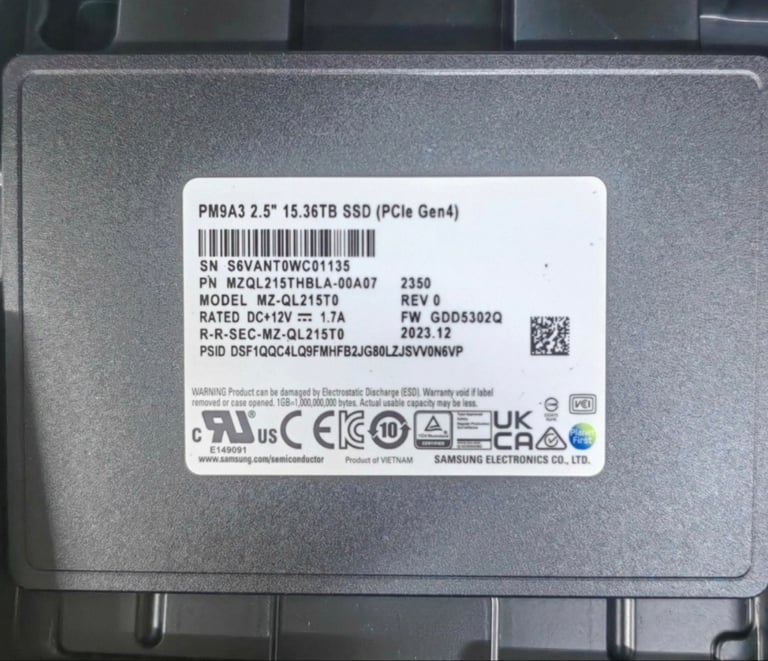
In the modern infrastructure economy, storage is no longer just a hardware category—it is a supply chain strategy, a cost-control mechanism, and a performance backbone all at once.
Enterprises no longer ask only “what SSD should we use?”
Instead, the real question has evolved into:
👉 “Can we secure stable, scalable, and consistent supply at the right tier?”
This shift has elevated enterprise SSD procurement from a technical task into a strategic sourcing discipline.
This article explores how key enterprise SSD platforms—Samsung, Micron, and Intel—fit into real-world data center architectures, and why stable wholesale supply has become a competitive advantage in itself.
🧠 The New Reality of Enterprise Storage Procurement
Over the past few years, enterprise storage has entered a structurally constrained environment:
Supply volatility across NAND production cycles
Rapid growth in AI and cloud storage demand
Extended lead times for high-capacity SSDs
Increasing price instability in 7.68TB–30TB segments
In this environment, procurement is no longer about optimization alone.
It is about continuity.
A modern IT buyer is no longer asking:
❌ “Which SSD is fastest?”
They are asking:
✔ “Which SSD is available in volume, stable in supply, and consistent in quality?”
⚡ Samsung PM1653: The SAS Backbone of Enterprise Infrastructure
The Samsung PM1653 (3.84TB, 2.5" SAS 24Gbps) represents one of the most important yet often overlooked segments in enterprise storage: SAS-based reliability systems.
🧩 Why SAS Still Exists in a NVMe World
Despite NVMe dominance, SAS remains critical because:
It integrates seamlessly with legacy storage arrays
It offers predictable enterprise-grade stability
It supports long lifecycle deployments
It reduces migration risk in large infrastructures
🖥️ Ideal Use Cases
Enterprise SAN storage
Virtual machine backends
Database archival systems
Mixed I/O workloads requiring stability
The PM1653 is not designed to compete with NVMe on speed.
It is designed to win on predictability and compatibility.
🚀 Micron 7450 Pro 15.36TB: High-Density NVMe for Modern Workloads
The Micron 7450 Pro (15.36TB U.3) sits in a very different category: high-density NVMe performance storage.
It represents a shift toward consolidation—fewer drives, higher capacity, and more efficient rack utilization.
🧠 What Makes It Important
This drive is optimized for:
read-heavy enterprise workloads
consistent QoS under pressure
virtualization and database environments
cloud-scale infrastructure
📊 Where It Fits Best
SQL / Oracle / MySQL clusters
NoSQL databases
Virtualization farms (VMware, Hyper-V)
CDN and edge caching nodes
What matters here is not just capacity—but density per watt, per rack unit, and per IOPS consistency.
In modern data centers, those metrics define efficiency.
⚡ Intel D7-P5510 7.68TB: The Balanced Enterprise NVMe Standard
The Intel D7-P5510 series represents a balanced NVMe enterprise architecture, widely deployed across cloud environments.
📦 Key Variants
7.68TB U.2 PCIe 4.0 NVMe
2.5" U.2 PCIe 4.0 NVMe form factor
🧠 Core Strengths
predictable latency behavior
strong endurance ratings
stable mixed workload performance
optimized firmware for cloud systems
🖥️ Ideal Deployment Scenarios
cloud service providers
enterprise virtualization clusters
storage caching layers
distributed application workloads
The P5510 is often chosen not because it is the fastest, but because it is consistently fast under real-world stress conditions.
🧩 Understanding Tiered Enterprise Storage Architecture
Modern infrastructure is not built around a single storage device.
It is layered.
🔴 Hot Tier (Performance Layer)
Micron 7450 Pro
Intel D7-P5510
High-end Samsung NVMe drives
🟡 Warm Tier (Balanced Layer)
mixed NVMe deployments
mid-capacity SSD clusters
🔵 Cold Tier (Capacity Layer)
HDD arrays
archival storage systems
This architecture allows enterprises to:
optimize cost per TB
improve workload performance
reduce overprovisioning
scale storage independently of compute
📈 Why Supply Stability Is Now a Competitive Advantage
In traditional procurement, price was the primary decision factor.
Today, that model is broken.
Because even the best price is meaningless if:
inventory is unavailable
lead times exceed deployment windows
batch consistency cannot be guaranteed
This is why wholesale enterprise storage has evolved into a strategic supply chain function.
⚠️ Quotation Discipline: Why Serious Inquiry Matters
Enterprise storage distribution is highly sensitive to:
model-specific availability
NAND allocation cycles
batch consistency requirements
fluctuating global demand
For this reason, structured procurement requests are essential.
A serious quotation typically includes:
exact model or capacity requirement
order quantity
condition requirement (brand new or pulled new)
Without this clarity, supply allocation cannot be optimized effectively.
🌐 One-Stop Procurement Ecosystem: Beyond Just SSDs
Modern infrastructure sourcing is not limited to SSDs or HDDs alone.
It extends into a broader ecosystem:
branded enterprise HDDs
SSD and NVMe storage platforms
TF / SD card supply chains
CCTV camera testers
surveillance infrastructure components
This reflects a shift toward integrated hardware procurement ecosystems, where buyers consolidate sourcing across multiple categories to reduce friction and improve logistics efficiency.
🧠 The Hidden Logic Behind Enterprise Storage Decisions
Behind every storage purchase decision lies a multi-variable equation:
performance requirement
cost per TB
endurance lifecycle
system compatibility
supply reliability
deployment timeline
The best solution is rarely the fastest or the cheapest.
It is the one that aligns all constraints simultaneously.
🚀 Why These Three Platforms Dominate Enterprise Procurement
Samsung, Micron, and Intel each occupy distinct but complementary roles:
Samsung → legacy + balanced enterprise ecosystems
Micron → high-density modern NVMe scalability
Intel → cloud-optimized stability and consistency
Together, they form the backbone of global storage infrastructure.
🔚 Final Insight: Storage Is No Longer a Component—It Is Infrastructure Strategy
Enterprise SSDs are no longer passive hardware units.
They are active enablers of:
cloud computing
AI training pipelines
real-time analytics
virtualization ecosystems
global data distribution
The companies that understand this shift are not just buying storage.
They are designing infrastructure resilience.
📌 Seller: Leon Wholesale
📞 WhatsApp: +8618136773114
📧 Email: leonxu0317@gmail.com
#Hashtags
#EnterpriseSSD #DataCenterStorage #SamsungPM1653 #Micron7450Pro #IntelD7P5510 #NVMe #SASStorage #U2SSD #EnterpriseStorage #ITProcurement #CloudInfrastructure #StorageArchitecture #HDDSSD #ServerStorage #B2BHardware #WholesaleStorage #HongKongStock #SupplyChainStability #TechInfrastructure #AIStorage